
Experienced manufacturing consultant in London with 20+ years of experience in product development and NPI. Excellent understanding of injection moulding, casting, metal work, silicone and rubber moulding, and prototyping. Used to working closely with contract manufacturers to improve processes.
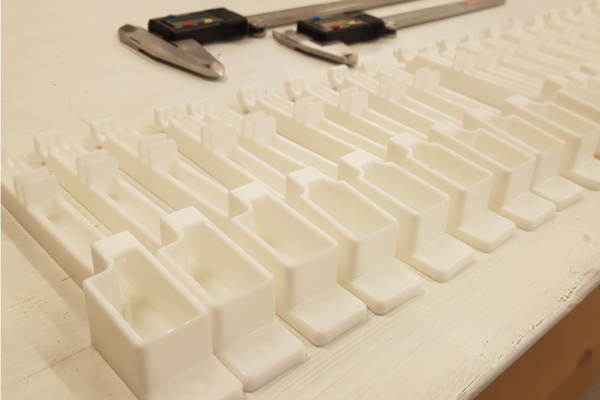
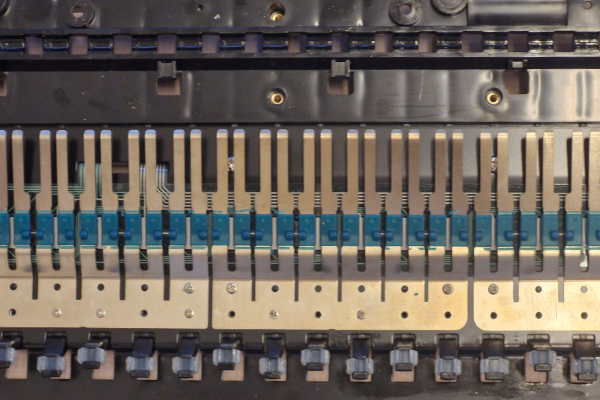
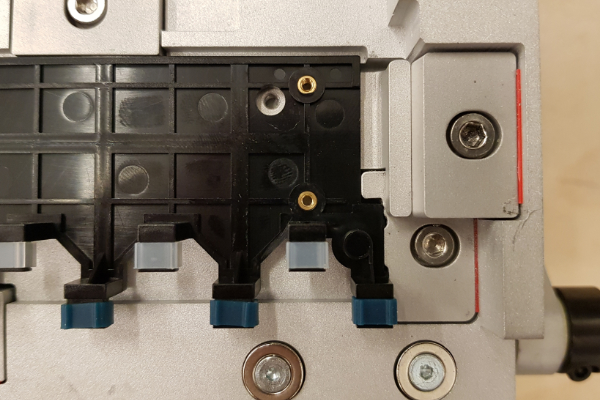
Manufacturing is perhaps the riskiest aspect of product development — not because things go wrong, but because challenges are usually underestimated, and the unplanned work and cost end up derailing a project.
In my experience, everything is possible to make, as long as there are enough resources (money and time) to develop the process technology and the laws of physics are not defied. New materials and processes keep emerging that prove this, but are often too expensive and time-consuming to be adopted by non-specialized products.
My approach in this field is to first stick with the known: use conventional materials and processes as much as possible, and only when that isn't possible, look into adapting an existing process. Ultimately, if all else fails, develop a custom process.
My experience across several sectors and industries allows me to recommend the most convenient material and process from an early stage, reducing development time and cost. It also allows me to help clients establish the required specifications, approval processes and quality systems to ensure a new product is made the right way from the beginning.
In addition, my network of international suppliers allows me to recommend trusted manufacturers that are a good match for each project.
Through the design process, I never lose sight of manufacturing aspects, but it is usually at the detailing stage that considerable effort has to go into ensuring the product and all its parts are fit for manufacturing.
Within this field I look at simple aspects like mouldability (draft angles, mould flow, wall thickness, gate points, ejector points, etc.), as well as more analytical areas such as tolerance analysis and process optimization.
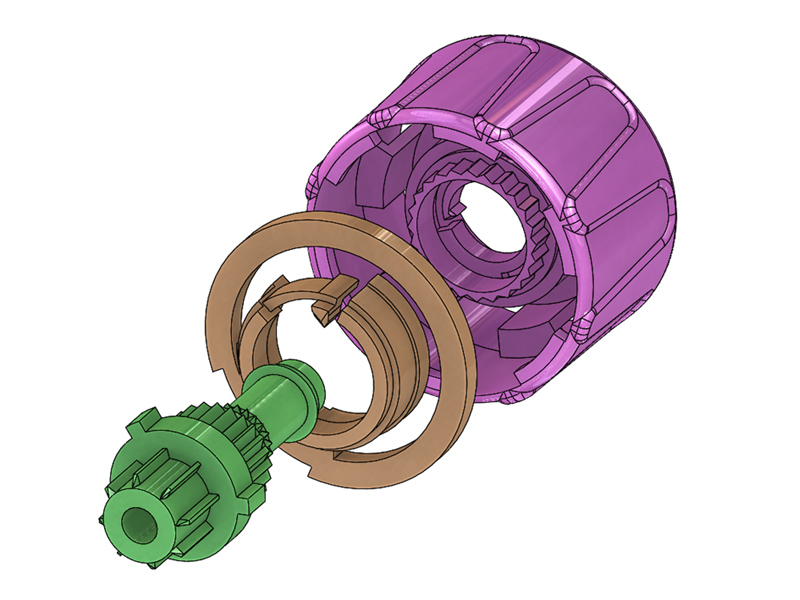
As soon as a product's requirements are defined, I start looking for the most suitable material — one that fulfils the product requirements, is accessible, easy to manufacture, and cost-effective. My experience in this field allows me to quickly identify a suitable material group, then refine the selection using different tools and advice from raw material distributors and manufacturers.
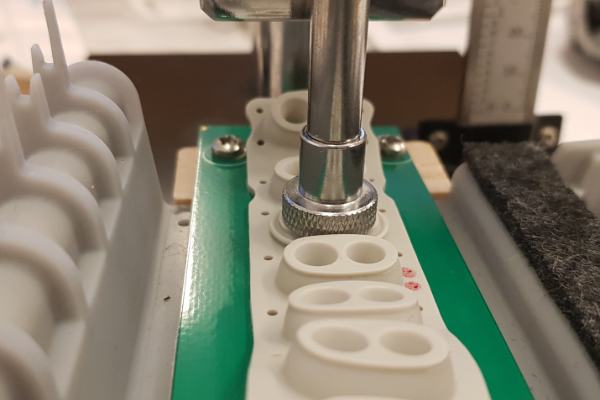
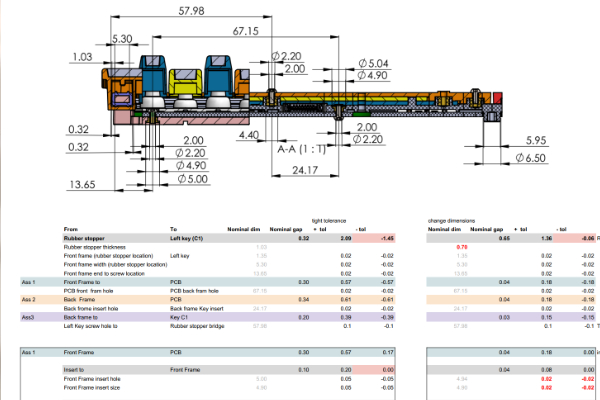
In this area, a simple stack-up analysis can define the manufacturing tolerance windows for all critical features. The downside is that the tighter the tolerance, the more complex the manufacturing process needs to be, increasing cost and timescale. In some cases, statistical tolerance analysis is used, which allows the tolerance window to widen using statistical tools. In any case, the ideal solution is to start with a design that doesn't rely on tight tolerances — though that isn't always possible.
When tolerancing, I use both numerical and geometrical tolerances and work with suppliers to ensure tolerances can be met without extensive inspection and increased cost and timescale.
Designing products to be made in high volumes isn't a secret, but experience in this field helps foresee challenges and features that may not form correctly. I follow a series of guidelines and reviews through the design process to ensure the manufactured product meets requirements and stakeholder expectations.
Within the detail design process, I look at wall thickness, draft angles, mould flow analysis, sink mark analysis, deformation and bending analysis, gating and ejection. These tools, combined with experience and moulder reviews, allow me to create designs that are made as intended.
Part of my work relies on finding the right supplier for my client — from a raw material supplier to an OEM. Using the right partner can be the key to success, and I help clients evaluate suppliers and define the best fit for the project.
My network of suppliers allows me to quickly identify potential partners for common processes and products. In some instances, however, we need to look for very specialized skills and a strong match to ensure a successful outcome.
My network of manufacturers spans companies in Europe, Asia and the Americas.
New Product Introduction comprises the whole development process through to launch, but is usually used to refer to the latest phases, where the product is industrialized and transferred to a manufacturer. NPI is usually described by the following process:
The most important part of NPI activities is the transfer to manufacture. During this phase, we hand over design authority (and responsibility) to the manufacturer, start producing first batches, and confirm that all quality procedures are in place to guarantee the product is made according to the agreed specifications.
This phase can require the greatest investment in a product's lifecycle, and if not planned and executed properly, it can have serious consequences. The complexity of making parts to the required quality is often underestimated, costs can increase quickly, and tensions between partners and suppliers can become difficult to manage. My experience in planning and transferring products to manufacture has taught me that attention to detail and a quick reaction to problems are paramount at this stage.
A key part of this process is finding the right manufacturing partner who shares the commercial vision the project requires.
Especially used for consumer electronics products, these terms relate to the resolution of prototypes and production units required to validate that a design is fit for mass production and will meet technical and user requirements (TRS, URS) or the PRD (product requirement document).
The number of samples and type of tests depend on the type of product and risk profile. I recommend conducting engineering testing and user trials as early as possible to guarantee the design is fit for purpose. From a manufacturing perspective, it's important to have all documentation ready and a test plan in place to run pilot production and ramp up as efficiently as possible.
In the medical sector and other regulated industries, it is vital to comply with high quality standards, often referred to as GMP (Good Manufacturing Practices). In my work, the process doesn't end with handing design specs to a manufacturing partner — in many cases I work in close collaboration with them to validate the manufacturing process. The objective is to ensure the product (or device) is made as it should be, and will always be made the same way. This process also transfers "design authority" from the development team to manufacturing, so that no change is made to the design without full manufacturing team involvement.
To validate the manufacturing process, we set up a series of tests and evaluation plans defining what an acceptable part and device will be. The process looks at equipment, tooling and the process itself, and is described by the FDA as follows:
Establishing, by objective evidence, that a process consistently produces a result or product meeting its predetermined specifications.
Confirms that all equipment is fit for purpose and has been set up correctly.
Challenges process parameters to ensure the process results in a product that meets requirements.
Demonstrates that the process will consistently produce an acceptable product under normal operating conditions.
This is a process I use from the design stage onward to reduce, and where possible eliminate, aspects that don't add value, keeping the product and process as efficient as possible.
I use a wide range of tools, including:
Kaizen · Poka-Yoke · Kanban · Bottleneck analysis · 5S · TRIZ · QFD · FMEA · Gauge R&R · Root Cause Analysis · KPIs · 5 Whys
For consumer products, PPAP is typically used to approve manufactured parts — in other words, to validate the production process.
The methodology is very similar to that used to validate medical product production, relying on part measurement, testing and statistical data to determine acceptance criteria for approval.
The key objective of PPAP and Six Sigma techniques is to ensure the manufacturer can consistently meet the design requirements (or specification).
I work as a consultant or contractor with different clients and consultancies, supporting the transfer to manufacture, manufacturing validation, and new product introduction processes. I am based in Cambridge, UK.
Find out more on how I work, or get in touch.
Tell us about the project — what stage it's at, and what you need help with.
Or email directly:
xorge@x-castro.com